What We Pass Between Generations
Your family may know what exists today. But do they understand what it took to get here?
Property. Businesses. Investments. Legal documents. Photographs. Possessions.
We protect them. Maintain them. Insure them. Account for them. Plan carefully for what will happen to them as responsibility passes from one generation to the next.
Yet the human history explaining how they came to exist can remain almost entirely undocumented.
The asset is visible. The story behind it isn't.
What happened isn’t the whole story
A family may know that the business began in 1978.
They may know that another property was purchased twenty years later. That the farm expanded. That one part of the business was sold. That Mum took over the accounts. That Dad refused to borrow money. That one sibling returned to the family business, while another built a life elsewhere.
Those are the facts.
Much harder to see are the circumstances surrounding them.
Why was that particular decision made? What else was happening at the time? What nearly went wrong? Who helped? What opportunity appeared at exactly the right moment?
What was sacrificed? What was gained? What was learned?
The answers are often carried by the people who lived them rather than written anywhere someone else can find them.
The difficult years provide context
As parents, we naturally want to protect our children from the hard stuff.
The years when money was tight. The decisions that frightened us. The season that nearly broke the farm. The period when the business was barely holding together. The uncertainty that followed a decision nobody knew would work.
There is love in that instinct.
We want the next generation to feel secure. We work so hard to protect them so perhaps they won’t have to experience some of the things we did.
But when we protect them from those stories too, we can leave out something they need: an understanding of what it took to create the life they know.
The difficult years aren’t simply family history.
They provide context.
They explain why certain risks were taken — or never taken again.
Why something was sold.
Why something else was fought to keep.
Why a family changed direction.
Why a business operates the way it does today.
Why an opportunity that might seem obvious now was impossible then.
And what was sacrificed along the way.
Without that context, the next generation can inherit the outcome without understanding what created it.
Context changes what we inherit
This isn’t only about farms, businesses or substantial assets.
Context exists in every family.
It can explain why someone worked three jobs. Why a family moved across the country — or across the world. Why grandparents rarely spoke about a particular period of their lives. Why education mattered so fiercely to one generation. Why money was saved rather than spent. Why a house was never sold.
Sometimes the story reaches back further than anyone still living.
One generation inherits part of the story from the one before it, adds its own experiences and decisions, and carries that combined history forward.
That is why preserving family history isn’t simply about recording what happened.
It is about preserving what those events meant.
The decision is the fact. The story is the understanding.
Don’t wait for someone to ask
One of the great traps with family stories is assuming there will be another opportunity.
“We’ll ask one day.”
“We’ll tell them when they’re older.”
“We’ll talk about it next time everyone is together.”
But these conversations don’t have to begin with the next generation.
If you’re the person who remembers the decisions, risks, opportunities and turning points, you can open the conversation yourself. Share what went right and what went wrong. Talk about the people who helped, the choices that changed direction, what was gained, what was learned and, yes, what was sacrificed.
And if you’re the person who wants to understand, ask.
The responsibility for beginning these conversations doesn’t belong to one generation.
What matters is that somebody begins.
Preserving more than the outcome
Not every family story needs to become a book.
What matters is that the knowledge doesn’t disappear simply because nobody thought to preserve it.
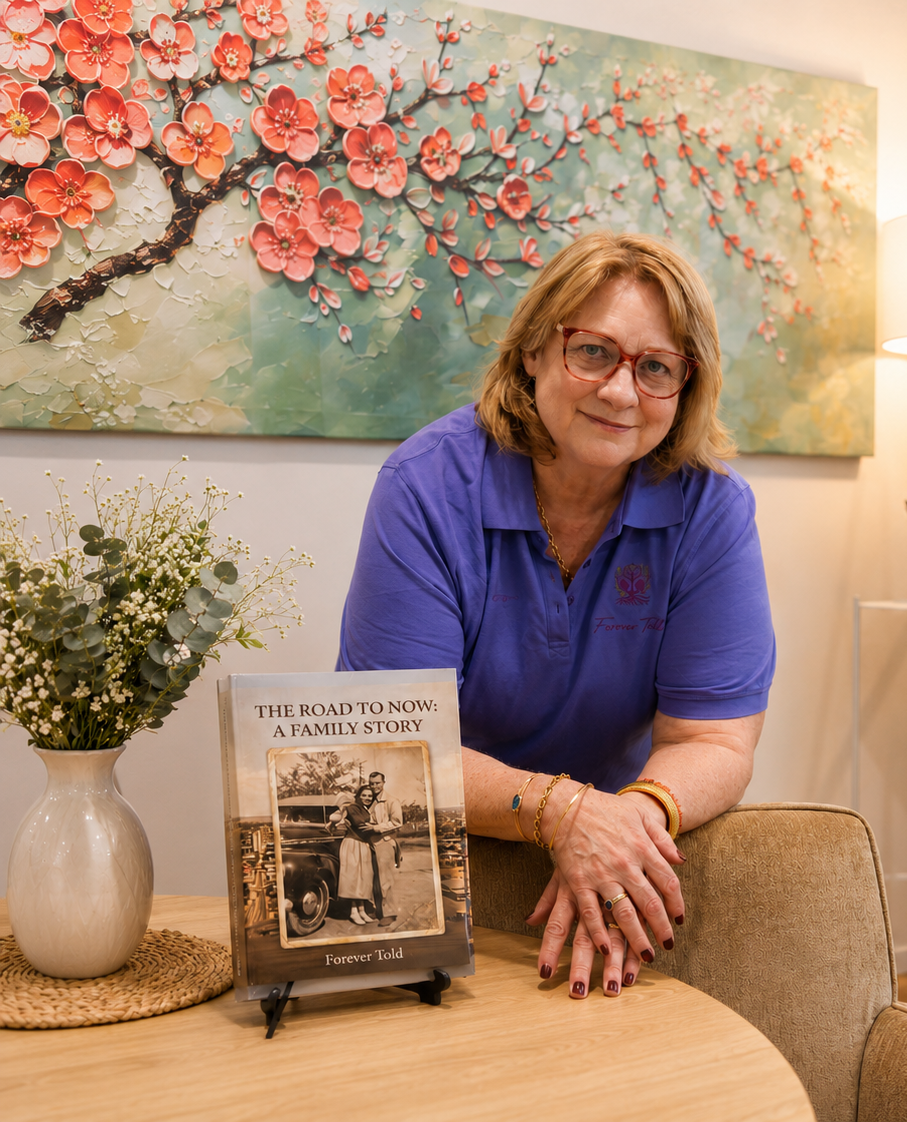
For one family, that may mean recording conversations between generations. For another, it may mean preserving the history of a family, farm or business in greater depth.
There is no single way a story needs to live.
But there is value in making sure it doesn’t leave with the person carrying it.
Because families don’t simply transfer property, businesses or assets from one generation to the next.
They transfer context.
And context is what allows the people who come next to understand not only what they inherited — but what it took to get here.
Start the conversation with your family.
And if there is a story you want to preserve, start a conversation with Forever Told.
Forever Told
Helping families preserve their stories, wisdom, values, and legacy for future generations.